

ibot duo redefines the aesthetics of self-balancing wheelchairs and empowers individuals with disabilities with independence and freedom of navigation.
An Overlooked Dimension of Mobility Design
Self-balancing wheelchairs have expanded mobility for people with disabilities in meaningful ways, yet all of them still retain the visual language of conventional wheelchairs, reinforcing the perception of disability.

People who use wheelchairs are often associated with the following stereotypes:

Over time, the conventional appearance of wheelchairs has become visually tied to these assumptions, causing people to associate the wheelchair itself with negative perceptions rather than the individual. This project challenges that association by rethinking the form of a self-balancing wheelchair.
Redefining Mobility Identity
A more intentional and stylish design language can help reduce the stigma associated with mobility aids while offering users a product they feel proud to use.

Moodboard
Sports car design helped shape the visual direction of ibot duo.
Like sports cars, the ibot duo was intended to feel expressive and well designed, helping shift away from the stigma often associated with wheelchairs. The self-balancing technology’s agile maneuverability and responsive movement also naturally align with the quality of a sport car.

Ideation


In this initial phase of doodling, a general design language was established. These early concepts incorporated clean, continuous surfaces paired with one or two distinct visual elements focusing around the lighting or rear panel areas.

The geometry of the selected concept draws inspiration from a spinning top, reflecting their shared characteristic of self-balance.
Presenting


The wheel design incorporates radially arranged reflective segments that create a distinctive visual signature in motion, drawing attention to the wheels as the core of the self-balancing technology.


To improve comfort, an ergonomic grip was designed around the way the ibot duo is operated via an iterative approach.
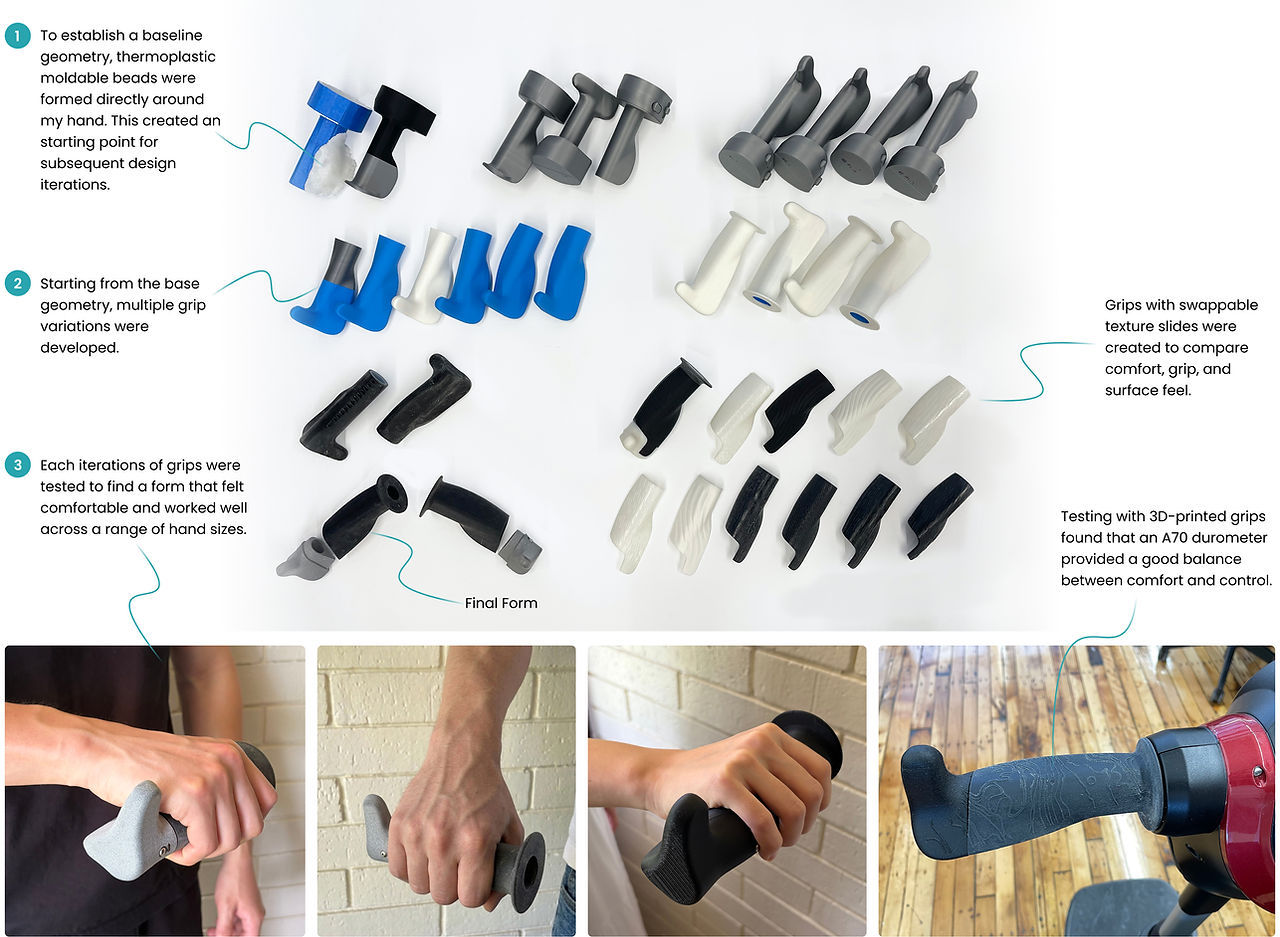

The grips textures derived from Manchester's street map and topographic map, origin of ibot duo. The combination also reflects the wheelchair's ability to support both everyday commuting and recreational use.


Development Process


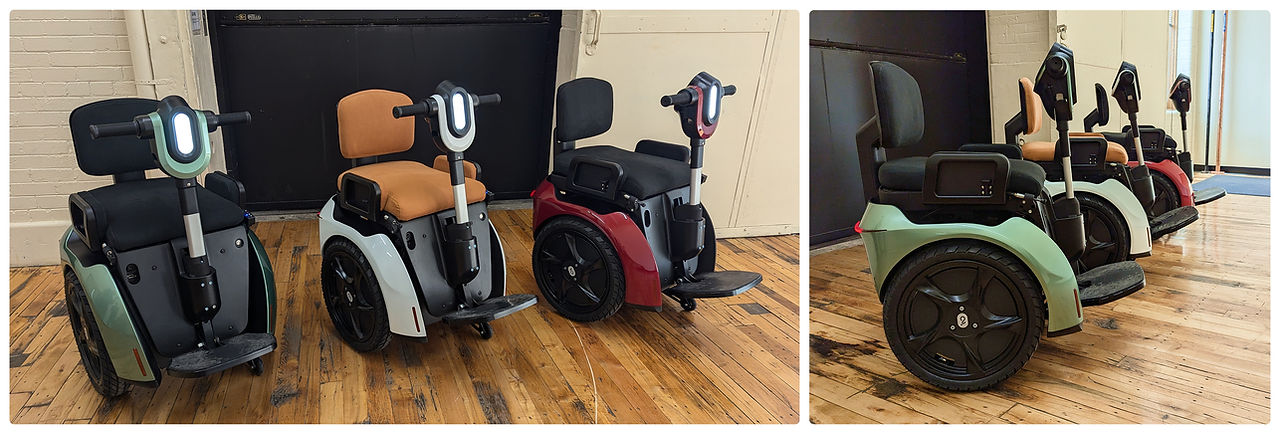

Design for Manufacturability
Collaborated with the engineering team on refining 3 groups of parts for DFM. Updated CAD geometry, draft angles, wall thicknesses, and surface textures to prepare the design for manufacturing.


